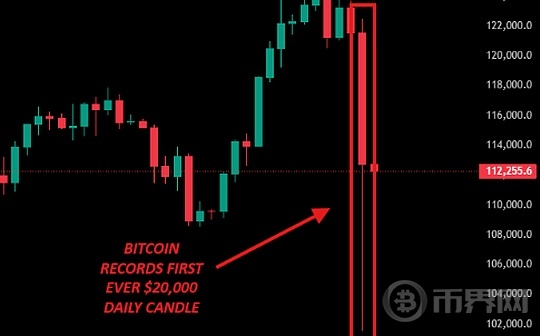
Crypto markets suffered another sharp sell-off on Friday, November 13. Bitcoin fell below $69,000, Ethereum lost the $2,000 mark and several major altcoins dropped more than 6%.
According to crypto.news market data, Bitcoin traded as low as $68,388, down 7% in 24 hours. Ethereum fell 6.2% to $1,922. Solana dropped 5.9% to $78.30, BNB lost 6.8% to $631 and XRP slipped 4% to around $1.
The sell-off came as stablecoin supply shrank by $14.2 billion, crypto investment funds kept bleeding and uncertainty around Nvidia's leadership resurfaced. Tensions in the Middle East and forced liquidations added further pressure.
Why is the crypto market falling today?
The latest leg down comes as investors weigh several shifts in demand for risk assets.
News that Nvidia CEO Jensen Huang resigned on November 12 weighed on tech stocks, especially companies tied to AI infrastructure.
Nvidia shares fell after the announcement, and CoreWeave and other AI-linked names also came under selling pressure. Bitcoin and major altcoins weakened over the same period.
crypto.news reported earlier that Bitcoin had already slipped below $73,000 as the leadership crisis at Nvidia deepened.
Meanwhile, stronger US inflation data raised expectations that the Federal Reserve may hike rates again in December.
The dollar and Treasury yields strengthened in tandem, adding pressure on investments sensitive to borrowing costs.
Geopolitical uncertainty kept building on Friday. Iran's Revolutionary Guard claimed it struck a US early-warning radar facility in Bahrain.
The attack was said to follow a strike on a telecom tower in southern Iran. US and Bahraini authorities have not immediately confirmed the Iranian claim.
Glassnode warns: $14.2 billion of crypto liquidity has drained out
Beyond Friday's volatility, blockchain analytics firm Glassnode flagged a steady decline in capital flowing into crypto trading.
In a research report published on November 11, Glassnode found that stablecoin supply shrank by $14.2 billion in the 30 days to November 9.
That is the largest contraction since June 2022, when the collapse of Terra triggered a mass exit from crypto markets.
Stablecoins such as USDT and USDC let traders hold dollar-pegged assets before buying Bitcoin, Ethereum and other cryptocurrencies.
When investors redeem stablecoins for dollars, the circulating supply falls, shrinking the dollar-pegged capital available in crypto markets.
Glassnode warned that the decline means “less fuel to power a rally.”
The firm also pointed to continued outflows from US spot Bitcoin ETFs and weak buying on Coinbase as further signs of fading demand.
The report shows Bitcoin is now trading below the average cost basis of recent buyers, at roughly $75,600.
Still, Glassnode found some buying from wallets holding 100 to 10,000 BTC, while both smaller and larger investor groups kept cutting exposure.
Bitcoin and Ethereum ETF outflows add to the selling pressure
Institutional crypto products kept seeing outflows during the downturn.
Glassnode reported that US spot Bitcoin ETFs lost about $1.6 billion over 20 trading days.
More recent Farside Investors data shows Bitcoin ETFs saw $299.8 million of net outflows on November 11, including $269.7 million from BlackRock's IBIT.
Ethereum funds saw similar selling. On the same trading day, US spot Ethereum ETFs lost $144.8 million, of which BlackRock's ETHA accounted for $129.8 million.
The withdrawals suggest investors are cutting exposure through regulated funds while Bitcoin and Ethereum trade below key levels.
The pressure has also spilled into derivatives. CoinGlass data shows $1.23 billion of crypto liquidations over the trailing 24 hours.
Bitcoin accounted for about $677.5 million and Ethereum about $249.8 million. Most liquidated positions belonged to traders betting on higher prices.
Which cryptocurrencies fell the most?
The latest crypto.news data shows broad declines across large caps, with privacy coins hit hardest.
Monero fell 11.1% to $510.71, Zcash 9.1% to $892.51, Dogecoin 6% to $0.06323 and Chainlink 4.2% to $9.67.
Later market readings showed other major assets, including Avalanche, Uniswap, Aave, Hedera and NEAR, also down about 6% or more.
Despite the sell-off, Glassnode's November 11 research still found large buy orders for Bitcoin between $68,000 and $72,500 on major exchanges.
The firm said buy orders have outnumbered sell orders within 5% of Bitcoin's price since November 5, though exchange orders can be pulled before they fill.
Glassnode also noted that $62,000–$66,000 is a zone where heavy Bitcoin positions were built, while its long-term analysis puts the June low near $58,500.
Disclosure: This article is not investment advice. The content and materials on this page are for educational purposes only.
In WeChat, tap Discover, scan the QR code and share this article to Moments.